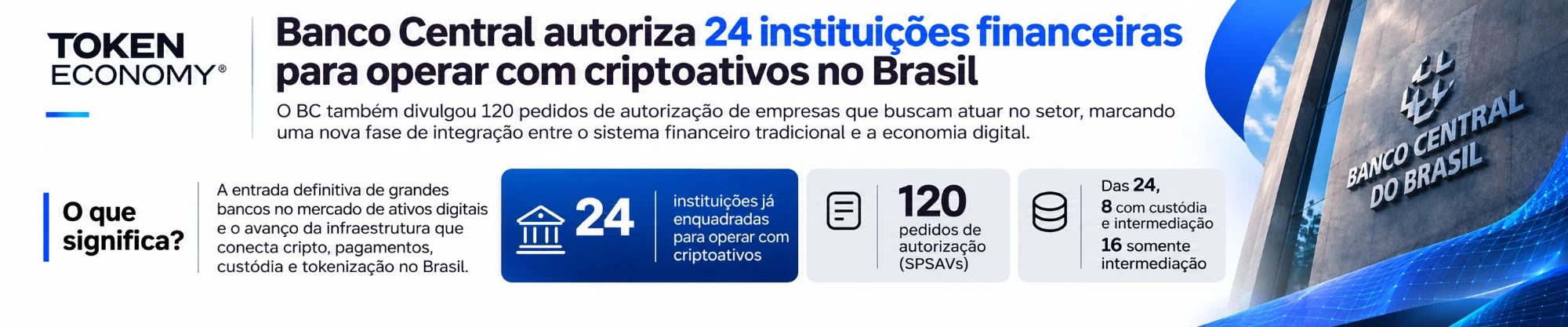
Banco Central brings 24 financial institutions into the regulated crypto-asset market and discloses 120 authorisation requests
The new phase of Brazilian regulation brings traditional banks, fintechs and crypto-asset companies closer together. The move signals a structural transformation of the country's financial infrastructure.

The Brazilian digital asset market has just taken an important step in its regulatory consolidation.
On Friday, 6 November 2026, the Banco Central do Brasil published a list of 24 financial institutions framed to provide services related to virtual assets, including some of the country's largest banks.
The names include Banco do Brasil, Itaú Unibanco, Bradesco, BTG Pactual and Banco Safra.
The list covers institutions that already hold an operating authorisation from the Banco Central and that follow a specific regulatory procedure to work with virtual assets, under BCB Resolution No. 520/2025.
Of the 24 institutions, eight are framed in the custody and intermediation modalities, while the other 16 appear in the intermediation modality.
But that was not the only relevant move of the day.
The Banco Central also published the list of companies that applied for specific authorisation to operate as Virtual Asset Service Provider Companies (SPSAVs). There are 120 entries, of which 119 are under review and one was rejected.
It is important to tell the two groups apart: the 24 institutions follow a framework of their own, while the 120 entries are authorisation requests still subject to regulatory review.
The traditional financial system is now fully in the game
The presence of large banks on the Banco Central's list shows that digital assets are no longer a market confined to exchanges and companies specialised in cryptocurrencies.
Traditional financial institutions are becoming part, in an increasingly structured way, of the service infrastructure involving virtual assets.
This move may speed up the development of new financial products, including:
- Buying and selling of crypto-assets by financial institutions.
- Institutional custody services.
- Integration between banking systems and blockchain infrastructure.
- Payment solutions with digital assets.
- Foreign exchange and settlement operations involving virtual assets.
- Development of tokenised financial products.
Being on the list, however, does not mean that all these institutions already offer these products to their customers. Implementation depends on each one's operational structure and on meeting the regulatory requirements.
120 requests: the size of the interest in the Brazilian market
The disclosure of the 120 authorisation entries also gives an important measure of companies' interest in staying in or entering the Brazilian market under the new rules.
The group includes companies specialised in crypto-assets, intermediaries and other participants seeking a regulatory framework for their activities.
Among the companies that move this market are names such as Binance, Mercado Bitcoin, Coinbase, OKX, Bybit, Bitget, Foxbit and Transfero, among other participants in the ecosystem.
It should be stressed that a company's presence on the list of requests does not mean authorisation has been granted. The applications still have to go through the Banco Central's assessment.
What changes with the regulation?
BCB Resolution No. 520/2025 sets requirements for the provision of virtual asset services in Brazil.
The regulation seeks to increase operational security, strengthen governance, set responsibilities for custody and intermediation and increase the transparency of operations.
Another relevant point is the relationship between virtual asset service providers and the traditional financial system.
From 6 November, restrictions take effect on relationships between financial institutions supervised by the Banco Central and unauthorised providers, subject to the transition rules and exceptions set out in the regulation.
In practice, access to banking infrastructure increasingly depends on participants' regulatory standing.
This is an important change for companies that built their businesses in an environment of less integration with the traditional financial system.
The next frontier: tokenisation and financial infrastructure
Beyond the cryptocurrency market, the regulation opens an even larger discussion: the transformation of Brazil's financial infrastructure.
The tokenisation of real-world assets, receivables, equity stakes, credit instruments and other economic rights depends on an infrastructure able to connect technology, governance, custody, payments and regulation.
In this context, blockchain stops being merely a technology associated with cryptocurrencies and becomes part of a strategic discussion about the evolution of financial services.
Brazil is in a position to take a relevant place in this process, especially because of the maturity of its payment system, the evolution of its capital market and the progress of its regulatory framework.
The coming together of banks, fintechs, technology companies and virtual asset service providers may speed up the development of new business models.
What to watch from here?
The publication of the two lists is a milestone, but it does not end the sector's transformation.
The next moves deserve attention:
- Final authorisations: follow the review of the 119 requests still under examination.
- New banking products: see which institutions turn their regulatory framing into services actually available.
- Institutional custody: follow the development of security and safekeeping solutions for digital assets.
- Financial integration: watch how banks and virtual asset service providers build their partnerships.
- Tokenisation: follow the expansion of models for issuing, distributing, trading and settling tokenised assets.
The market enters a new stage. The discussion is no longer only about who offers cryptocurrencies, but about who controls, connects and operates the next generation of financial infrastructure.
The question now is no longer whether digital assets will be part of the Brazilian financial system. It is who will be ready to build and operate this new infrastructure.
Lizzy Zanlutti
View profileMore from the hub
See all news
The regional developer was left out of credit
Banks have become pricier and more selective, and the public fund has stopped growing. Tokenized capital can fill that space, as long as it comes with real backing, clear rules and a structure that does not strangle those who build.

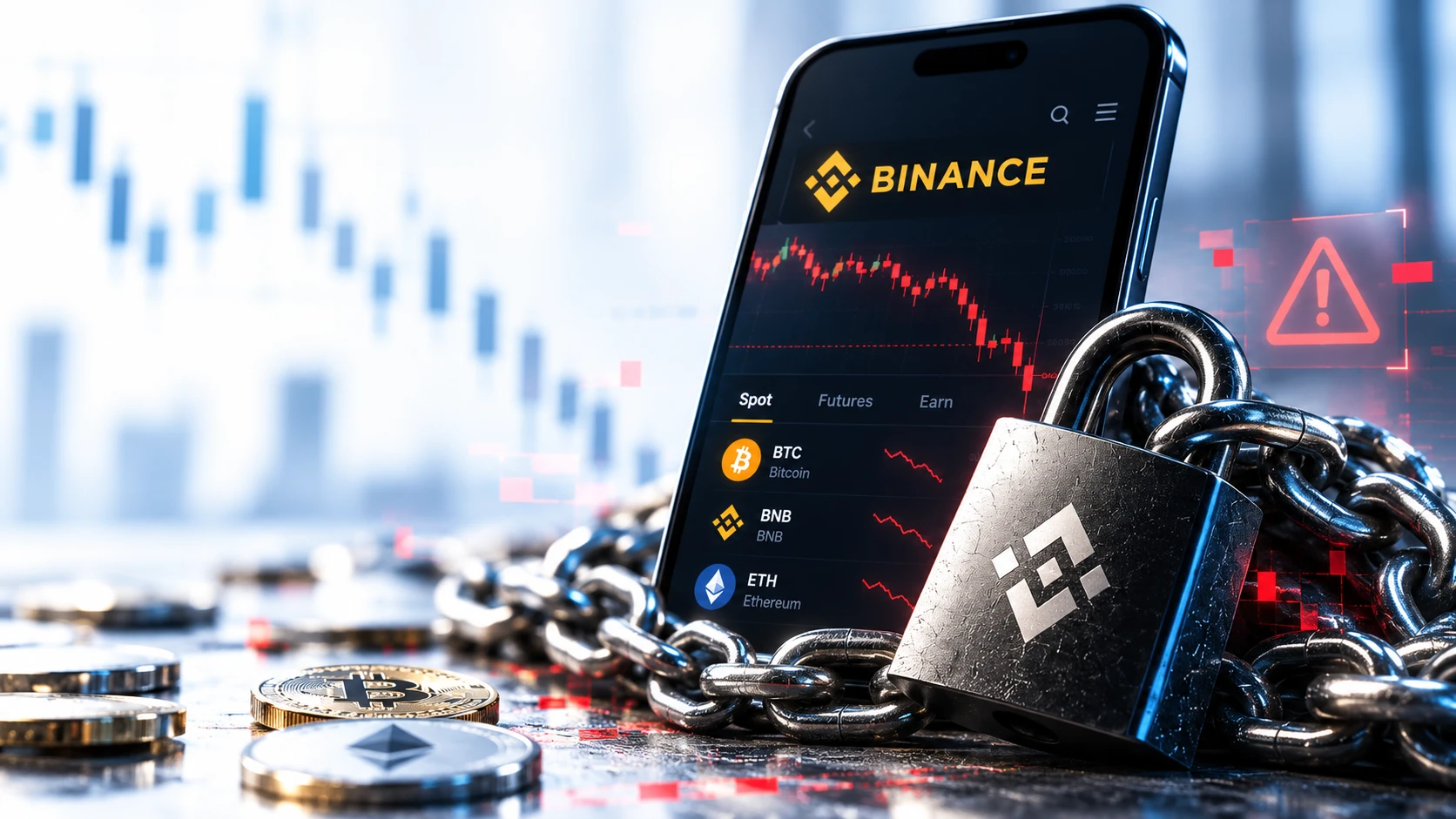
The biggest hack in crypto history leaves a fundamental question: how prepared are we to respond to billion-dollar crises?
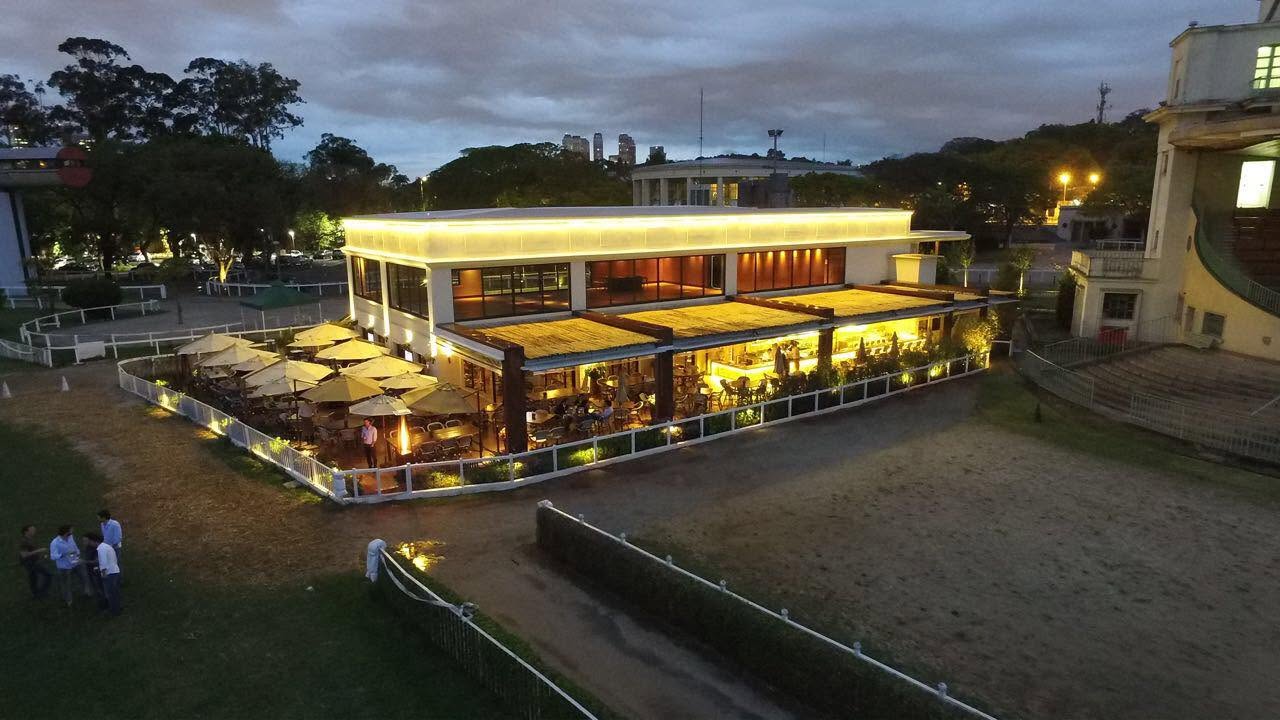
Before the stage, the table: PaytechLatam prepares a business gathering in São Paulo
The PaytechLatam Executive Dinner brings together payments, open finance and fintech professionals for an executive dinner at the Jockey Club de São Paulo. The idea is to swap the traditional conference format for conversations at the table.