The biggest hack in crypto history leaves a fundamental question: how prepared are we to respond to billion-dollar crises?

The attack on Binance, with an estimated impact of US$ 6.3 billion according to the account released, exposes one of the most important questions in the digital asset market: security does not depend only on technology, but also on the response capacity of the whole ecosystem.
After the attack, stablecoin issuers and decentralized protocols went into action. Tether, Circle, Ripple and other participants blocked or restricted movements of funds linked to the incident. In all, roughly US$ 2.7 billion were reportedly frozen, according to the figures presented.
But the most interesting figure is not just the volume recovered. It is the speed of the response.
Tether and Circle were able to act within minutes. In the decentralized ecosystem, the response depended on governance mechanisms, security signatures and collective decisions.
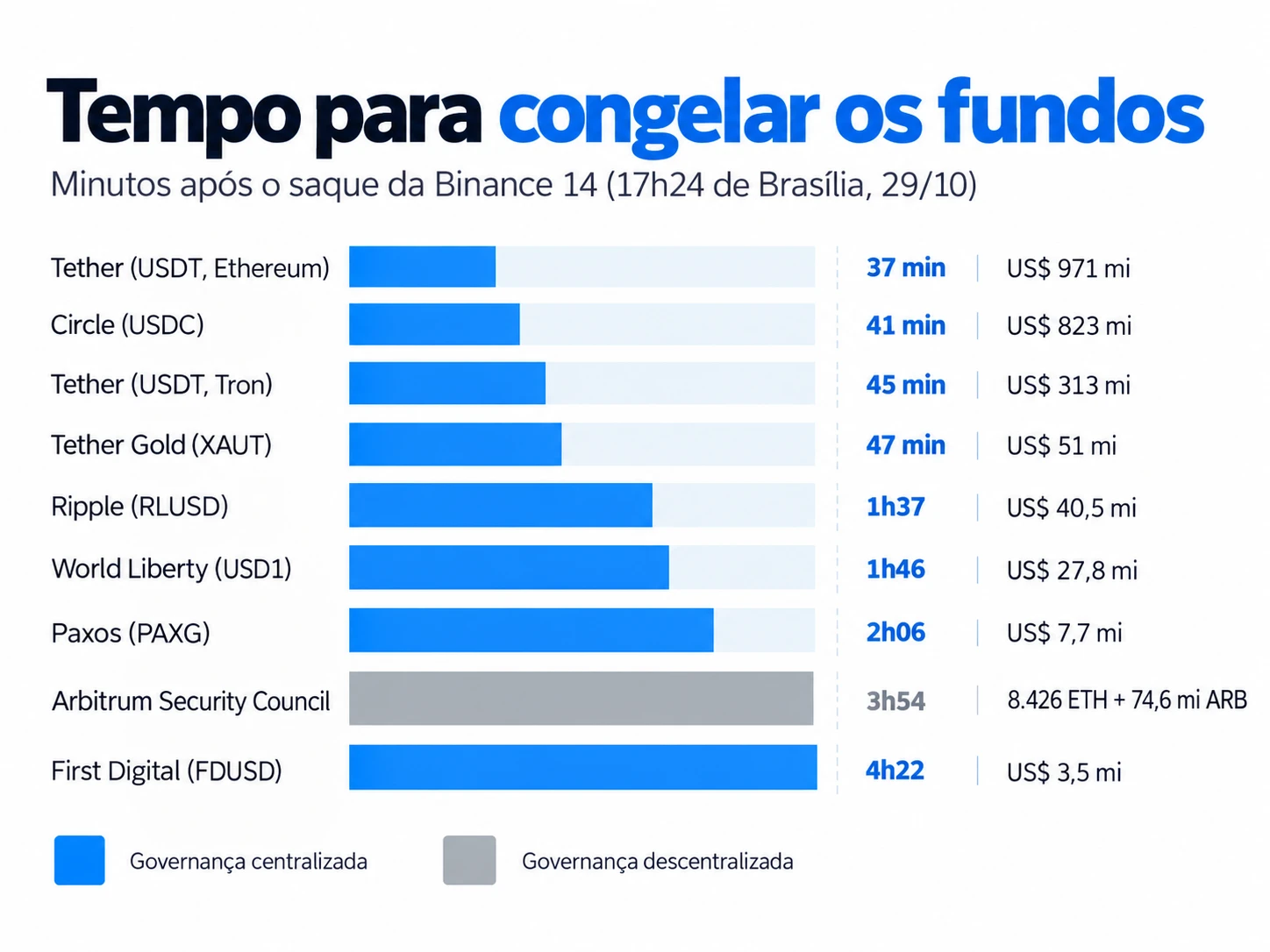
This contrast reveals a central question for the future of digital finance:
🔹 Centralization: allows fast responses, but concentrates decision-making power in institutions.
🔹 Decentralization: seeks to distribute power, but may require more complex governance processes in emergencies.
🔹 Stablecoins: hold a strategic position in this discussion, as they combine the efficiency of digital assets with control mechanisms that vary by issuer.
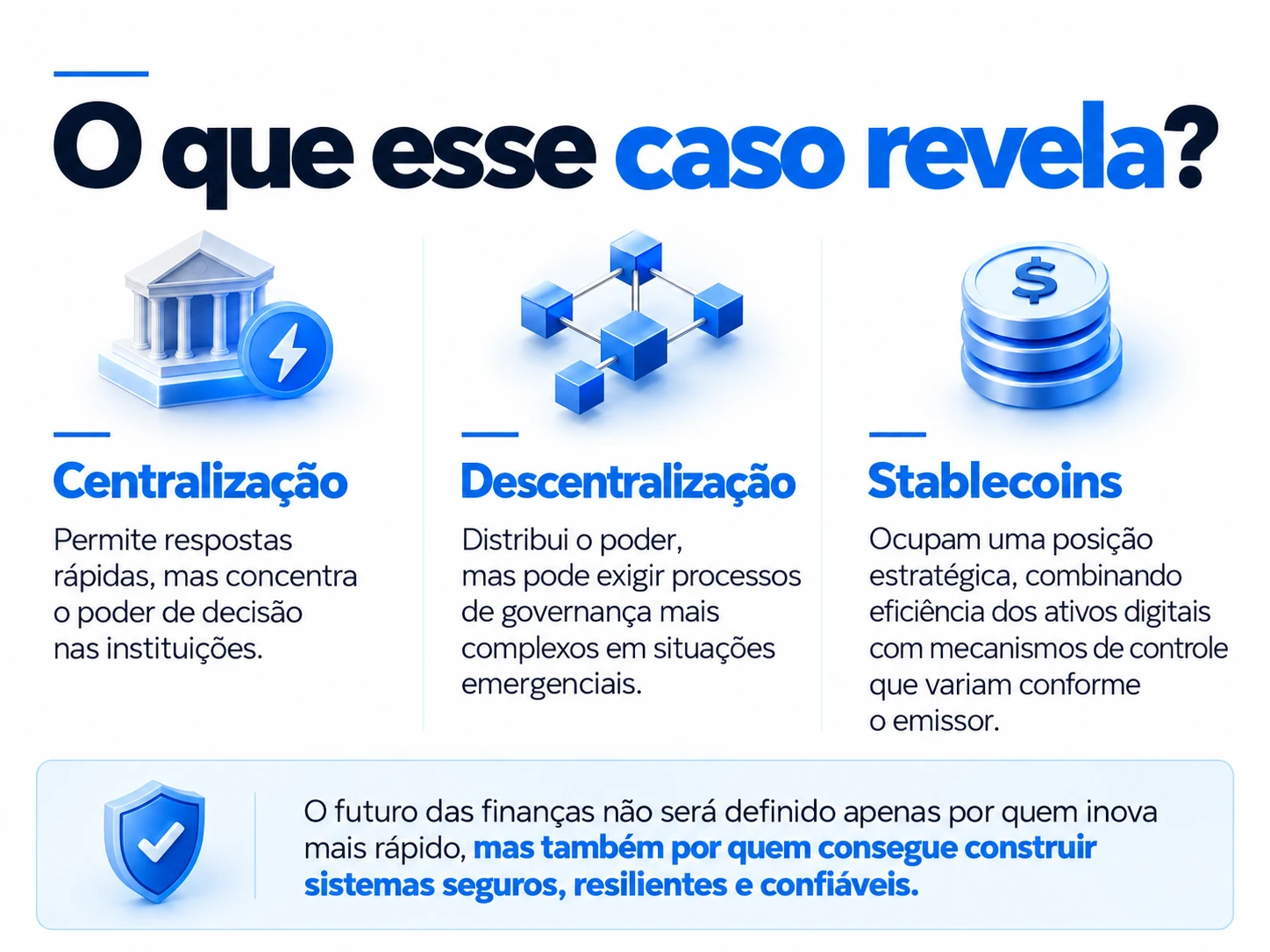
This is not about claiming that one model is superior to the other. It is about understanding the risks, the limits and the responsibilities of each architecture.
As tokenization advances and digital assets integrate into global financial infrastructure, security, governance and response capacity stop being purely technical issues. They become essential elements for institutional trust and adoption at scale.
The future of finance will not be defined only by who innovates fastest, but also by who manages to build safe, resilient and reliable systems.
This is one of the discussions we need to deepen in the Brazilian market.